Every gallon of diesel
you haul is sludge.
Traditional aluminum and iron coagulants can add up to 40% to your sludge volume at a 1 mg/L phosphorus limit — and over 55% at sub-1 mg/L limits. At today's diesel prices, every extra truckload to the landfill or incinerator is money burning. LaNova's rare-earth and lanthanide blends cut that sludge 20–40%, dewater drier, and keep your disposal costs from riding the diesel index.
Cost-effective water treatment
Lanthanide chemistry,
done seriously.
LaNova removes phosphorus with reduced coagulant volumes and less sludge — a fractional resource for plants that need process improvement and compliance without a full-time chemist on staff.
Pro-rare-earth chemistry
Lanthanide blends developed in-house for North American water — not borrowed from drinking-water playbooks. Chemistry that targets phosphorus, not everything around it.
Why LaNovaExcellent phosphorus removal
Lanthanides bind phosphate selectively into a dense crystal, achieving effluent below 0.07 mg/L at significantly lower dose rates than ferric or aluminum salts.
See the chemistryLess sludge volume
Up to 60% less chemical sludge than ferric chloride, aluminum chloride, or polymer coagulants — dewatering drier cake and shrinking every truckload to the landfill.
Cut your sludgeProven results
Rare-earth chloride chemistry deployed across North American plants from 0.02 MGD to 45 MGD — field evidence, not just jar tests.
Case studiesPowerful benefits
Greater water clarity, faster coagulation, improved sludge dewatering, better digester performance — with no staining or discoloration of facility structures.
Plant impactHow it works
Traditional coagulants are non-specific and demand massive doses. Lanthanides have a strong, selective attraction for phosphorus — less coagulant, less sludge, less cost.
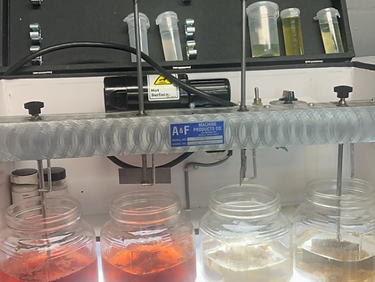
Jar test training
03 — The Chemistry
Unique.
Specialized.
Custom.
LaNova means "the new" — and like our name, our chemistry is unique, specialized, and custom. It's a tool we bring to solve your problem, not a product we're here to sell.
Where standalone rare earths are expensive and collapse in variable water, our patented lanthanide blends perform across that variability at a fraction of the dose — non-hazardous, engineered to your water. The right chemistry, deployed as a service.
Non-haz
Blends
Custom
Chemistry
Service
Not sales

Engineered to the water
We bring the chemistry that fits your problem — not a product that fits our shelf.


Patent Portfolio
Proprietary methods,
patented.
LaNova's founder is credited across the core of modern advanced water treatment — issued patents and pending applications that protect the lanthanide chemistry, the separation science, and the recovery methods behind every result we deliver.
Method and Apparatus for Treatment of an Animal Processing Wastewater Stream
Inventors: Scott Frazier & Jon Khachaturian · App. No. 16/924,751
Treatment of wastewater generated from animal processing (poultry, beef, pork) using rare earth density modifiers — lanthanum, cerium, and praseodymium salts — to modify the protein phase density and enhance lipid fat phase separation from protein solids. Results in up to 50% reduction in sludge disposal volume.
Key claims
- 01Two-stage rare earth density modification using lanthanide salts
- 02pH-controlled DAF flotation separating protein and lipid solids
- 03Up to 50% reduction in sludge volume trucked from the plant
- 04Recovered float suitable as animal feed — fat and protein separated
Pending Applications
The proprietary pipeline.
Recovery-grade lanthanide blends
Engineered blend chemistry
Lanthanide blends tuned to the actual matrix so the active dose drops sharply while performance holds across variable influent — engineered for recovery, not disposal.
Chloride-free organic acid blends for bioP & nitrogen removal
Biological nutrient removal
Chloride-free organic acid lanthanide chemistry drives biological phosphorus and nitrogen removal without the chloride load that inhibits biology.
Enhanced quality of recovered fractions
Beneficial reuse
Lifts the purity of recovered protein and lipid fractions to meet beneficial-reuse and feed-grade specifications.
Improved nitrification & resilience to toxic shock
Biological resilience
Strengthens nitrification against the toxic shock loads and inhibitory compounds common to high-strength industrial streams.
Drying and extraction of lipids from biomass
Lipid recovery
Efficient drying and extraction of lipids from biomass — turning DAF solids into a recoverable fat fraction.
Rare-earth refinement
Treatment-grade chemistry
Refines rare earths into treatment-grade chemistry with the selectivity and consistency wastewater service demands.
Protein fractioning
Protein separation
Chromatography-based protein fractioning — the separation science behind LaNova's engineered blends.
The Process
One integrated
treatment train.
01
Assess
We start with your process and your compliance goal — understanding the water, the constraints, and what success looks like before recommending anything.
02
Recommend
A trusted, unbiased recommendation — chemistry, a process change, or both. We're not here to sell chemicals; we're here to solve the problem.
03
Support
Fractional back-fill: we deploy, tune, and stand behind the solution as an extension of your team — senior capability on demand, no permanent overhead.
04
Verify
Compliance confirmed and process improved — ultra-low phosphorus, non-detect PFAS, reuse-grade purity — documented and defensible.


American Rare Earths

Independent Verification
Verified by engineers.
Trusted by operators.
Commodity chemical salespeople submit on price and deliver no value behind it. We don't compete on price — we earn the work with jar testing, then submit the results to an independent engineering firm. The value is proven before the invoice. Understanding first, price last.

Municipal WWTP · Tertiary Phosphorus Removal
South Fork Coeur d'Alene River Sewer District · Page WWTP · Osburn, Idaho
The South Fork Sewer District needed to optimize phosphorus and metals removal at the Page WWTP to meet a stringent NPDES permit limit of 0.15 mg/L total phosphorus. Esvelt Environmental Engineering conducted a comparative jar-testing program evaluating three coagulants — 48% aluminum sulfate, 38% sodium aluminate, and a 45% cerium and lanthanum chloride rare earth solution — across a target pH range of 7.0 to 9.0 S.U. Alum and sodium aluminate were tested first; neither could achieve the 0.15 mg/L target under the permitted pH conditions.
0.056 mg/L
Lowest TP achieved — rare earth at 40 mg/L
Failed
Alum and sodium aluminate could not meet 0.15 mg/L target
< 5 mg/L
NaOH dose required for pH adjustment with rare earth
| coagulant | dose | tp result | srp result | meets target |
|---|---|---|---|---|
| Alum (best result) | 90 mg/L | 0.237 mg/L | <0.01 mg/L | No |
| Sodium Aluminate (best result) | 25 mg/L | 1.570 mg/L | 0.053 mg/L | No |
| Rare Earth (Ce/La Chloride) | 40 mg/L | 0.056 mg/L | <0.01 mg/L | Yes |
Total phosphorus and SRP (mg/L as P) · Secondary effluent, AUG 2026 · SVL Analytical Laboratory (SM 4500-P-E) · Target TP ≤ 0.15 mg/L
Technical memorandum prepared by Allison Esvelt, MSCE, PE, BCEE, Principal, Esvelt Environmental Engineering, LLC · July 30, 2026 · Prepared for J-U-B Engineers, Inc. and South Fork Coeur d'Alene River Sewer District
View all case studies06 — Field & Lab
From the field
and the lab.
Not renderings — the actual work. The treatment floor, the weirs, the jar tests. This is where recommendations are earned and problems are solved.


On the floor
Suited up and pouring — coagulant trials on real plant water, not a catalog spec.


Reading the settle
Graduated cylinder at eye level — measuring the floc that actually drops.

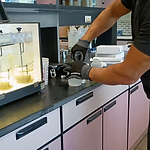
Bench work
Characterizing the stream at the bench — the first read on any new water.

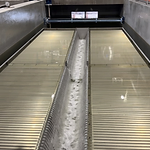
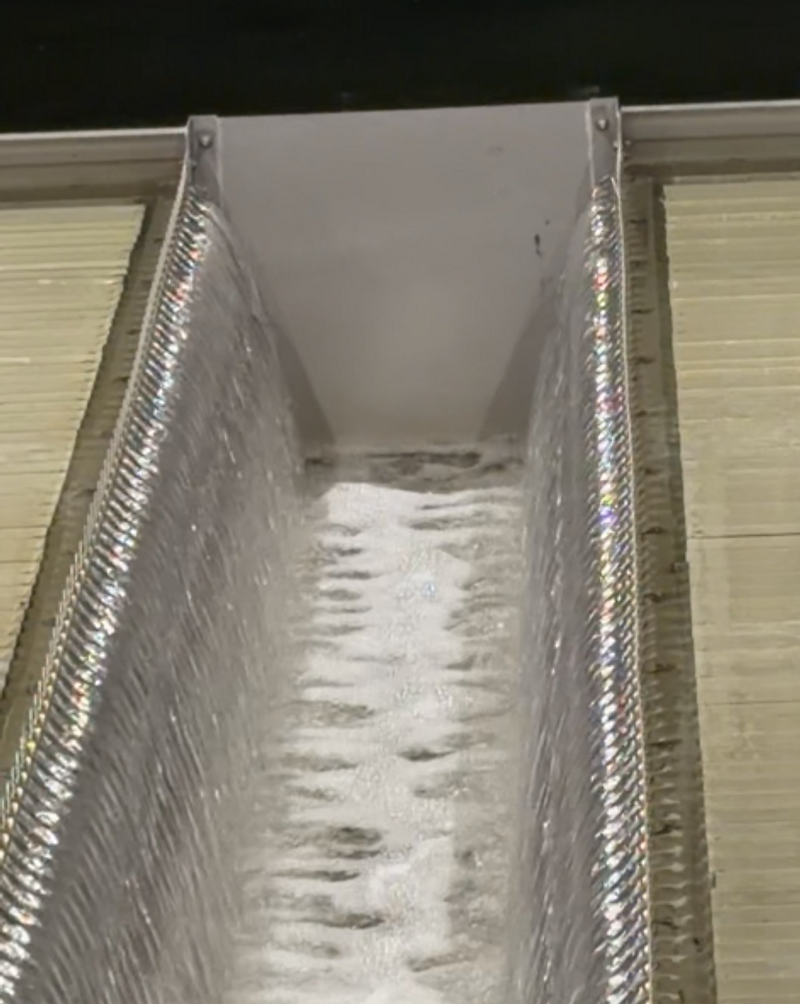
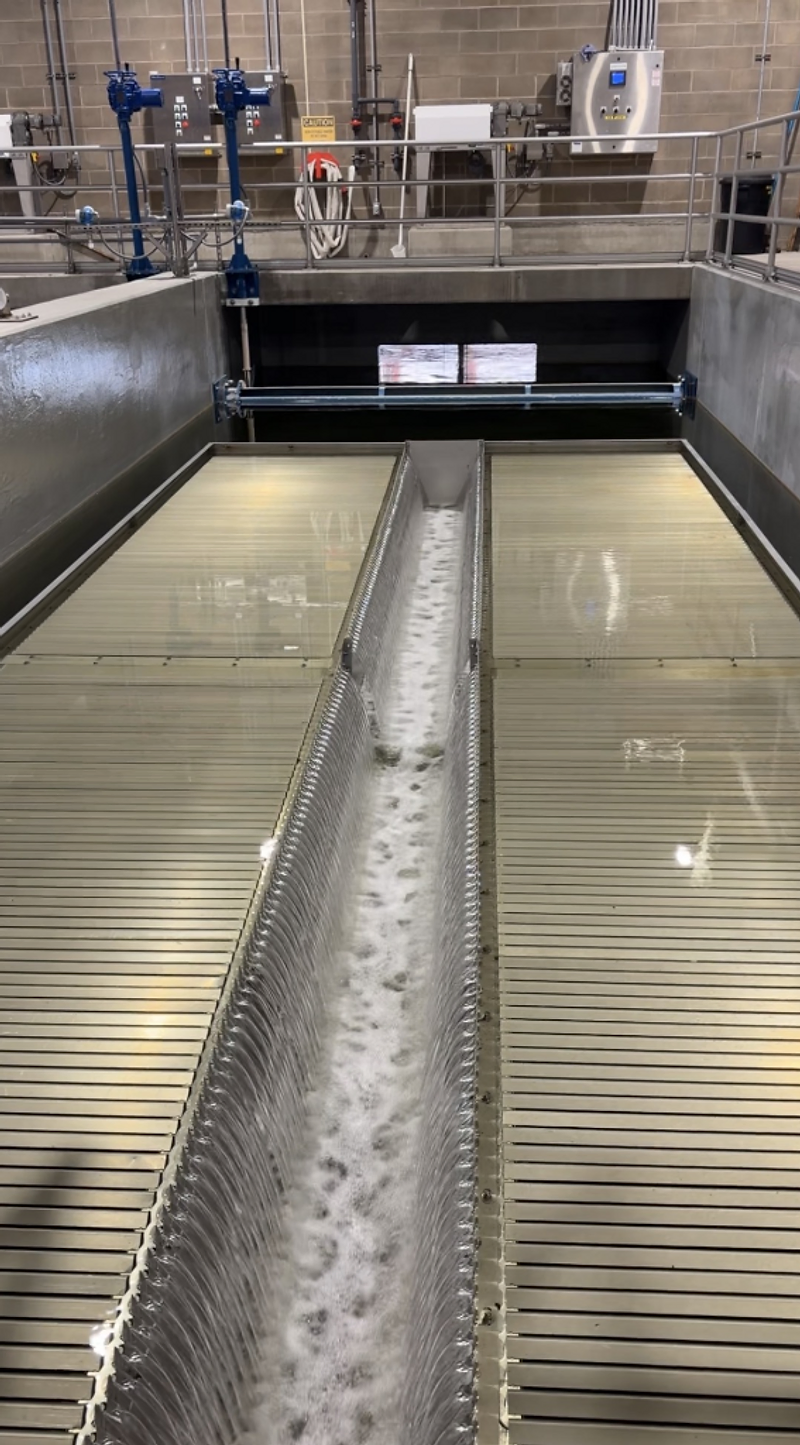
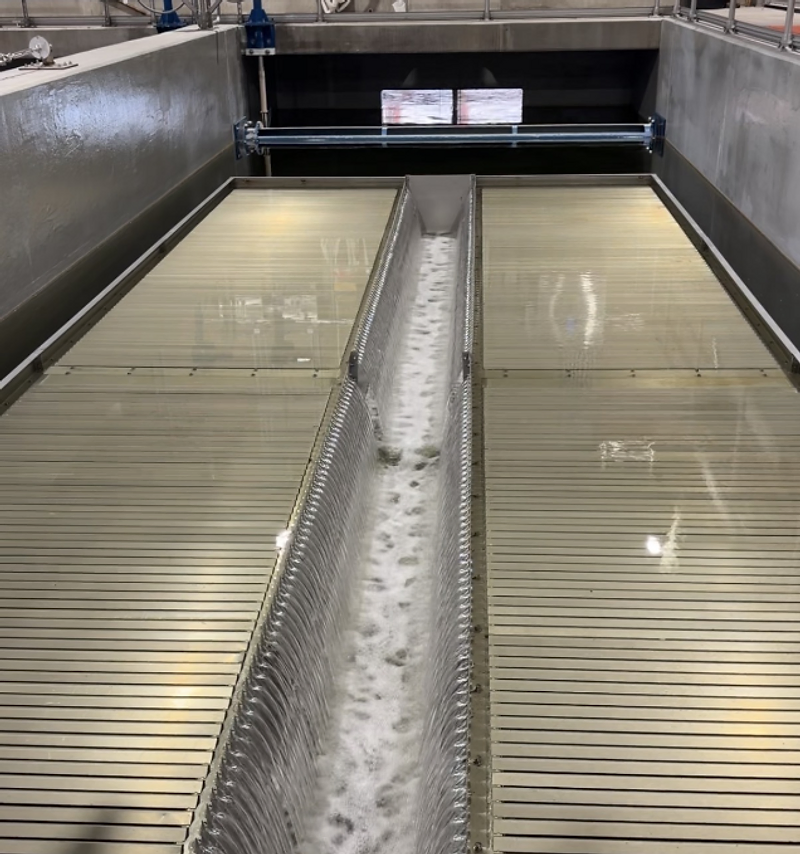
The treatment floor
Clarifiers and collection channels, in operation.

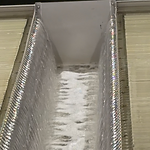
V-notch weirs
Where settling meets discharge.

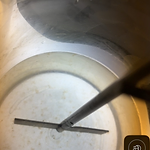
Aluminum
The same test with aluminum sulfate — the conventional baseline.

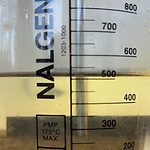
Improved settling
Rare earth settles denser and faster than aluminum at half the dose.

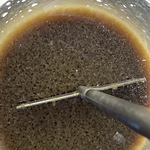
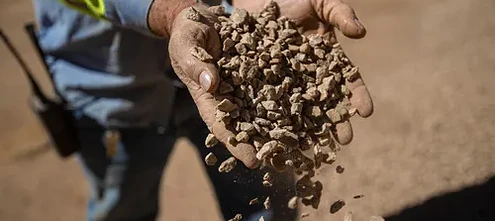
Dense rare earth solids
Top view — the compact solids fraction rare earth produces.

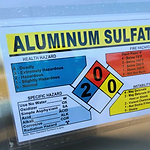
Aluminum sulfate — hazardous
The placard tells the story: aluminum sulfate is hazardous. Our blends aren't.

06 — Engage
Let's
solve it.
Tell us about your process and your compliance goal. We'll give you a trusted recommendation — chemistry, a process change, or both — and back-fill the work as your fractional resource.
1-888-403-8188
Free consultation · on call 24/7/365